Written By

Sonju Ghosh
Growth Lead
Search engine optimization has evolved significantly over the last decade. In the early days of SEO, ranking on search engines often depended heavily on inserting keywords into content and building backlinks from other websites. While these factors are still important today, search engines now rely on far more advanced algorithms that analyze content structure, topic relevance, and website expertise.
Modern search engines aim to deliver the most useful and authoritative information to users. Because of this, websites that demonstrate deep knowledge and structured coverage of a topic are more likely to rank higher in search results. This concept is known as topical authority.
One of the most effective ways to build topical authority is through topic clusters and internal linking. Instead of publishing isolated blog posts, websites can organize their content into interconnected groups of articles that focus on related topics.
In this comprehensive guide, we will explore how topic clusters work, why internal linking is essential for SEO success, and how implementing these strategies can significantly strengthen topical authority and organic search visibility.
💡Is link equity leaking from your best pages? Dofollo finds it free — no credit card, no setup time.
Start Free AuditUnderstanding Topical Authority
Topical authority refers to the level of expertise and credibility a website demonstrates around a particular subject. Search engines prefer to rank websites that provide deep and comprehensive coverage of a topic rather than websites that publish scattered or unrelated content.
For example, imagine two websites publishing articles about SEO. The first website occasionally publishes SEO articles but mostly focuses on unrelated topics like travel, lifestyle, and entertainment. The second website publishes a large collection of interconnected articles dedicated specifically to SEO strategies, website optimization, and digital marketing.
Search engines will naturally trust the second website more because it demonstrates stronger topical expertise.
When a website builds topical authority, it benefits from:
- Higher trust from search engines
- Improved keyword rankings
- Faster indexing of new content
- Greater organic traffic growth
- Increased user engagement
However, achieving topical authority requires a well-structured content strategy rather than simply publishing more articles. This is where topic clusters become extremely valuable.
What Are Topic Clusters?
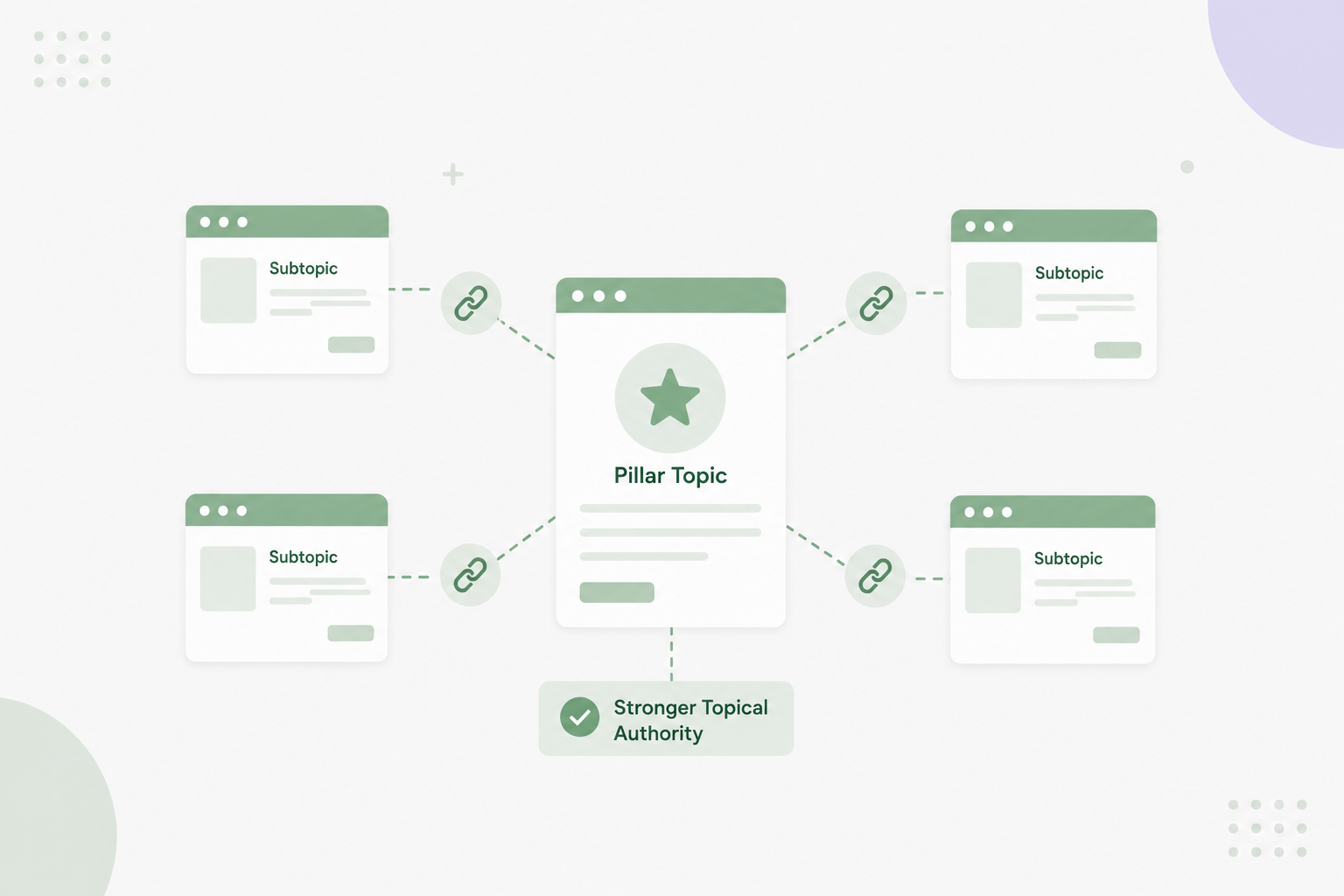
Topic clusters are a content organization model that groups related articles around a central topic. Instead of treating every blog post as an independent piece of content, topic clusters connect multiple related pages through internal links.
At the center of the cluster is a pillar page, which covers the broader subject. Surrounding the pillar page are cluster articles that focus on specific subtopics related to the main topic.
For example, a pillar page about website optimization could include links to supporting cluster articles such as:
- How to Reduce Server Load
- Browser Caching Best Practices
- Image Optimization for Faster Websites
- Minifying CSS and JavaScript
- CDN Benefits for Website Speed
Each of these articles focuses on a specific aspect of the broader topic while linking back to the pillar page. This structure creates a content ecosystem where every page contributes to the authority of the main topic.
The Importance of Internal Linking
Internal linking refers to hyperlinks that connect pages within the same website. These links help search engines understand the structure of the website and how different pieces of content relate to each other.
Internal links serve multiple purposes in SEO. First, they help search engine crawlers discover new pages. Second, they distribute link equity throughout the website ? pages with strong authority can pass some of that authority to other pages. Third, internal links help search engines understand the topic of a page through anchor text, providing stronger contextual signals.
For users, internal links also provide a better browsing experience by guiding readers toward additional useful information.
How Topic Clusters Strengthen SEO
Topic clusters provide a structured way to organize content that aligns with how modern search engines analyze information. Instead of relying on a single page to rank for a competitive keyword, a topic cluster allows multiple related pages to collectively strengthen the topic's authority.
When search engines crawl a topic cluster, they see a central pillar page covering the broad topic, multiple supporting pages covering specific subtopics, and internal links connecting all the pages logically. This structure signals that the website has deep expertise and comprehensive coverage of the subject.
Topic clusters also allow websites to target long-tail keywords ? specific search queries that often have lower competition but high intent. By covering many related long-tail topics, a website can attract consistent organic traffic from a wide variety of searches.
How Internal Links Reinforce Topic Relationships
Internal linking is what transforms individual articles into a true topic cluster. Without internal links, even the most informative articles remain isolated pages that search engines may struggle to connect.
When internal links connect multiple related pages, they reinforce the semantic relationship between them. For example, if an article about website performance links to other pages discussing caching, image optimization, and server performance, search engines recognize that these pages all belong to the same topical category.
Over time, as more pages are added and connected, the website develops a powerful network of related content that search engines interpret as expertise.
Using Tools to Improve Internal Linking
Managing internal links across a growing website can become challenging, especially when hundreds of articles are involved. Automated tools can help identify internal linking opportunities and analyze how competitors structure their content strategies.
Dofollo.ai helps website owners improve their internal linking structure through AI-suggested internal links that automatically identify relevant linking opportunities between pages. It also provides competitor strategy analysis and helps users add internal links to their pages efficiently ? ensuring that important articles remain connected within the website's content architecture.
Steps to Build an Effective Topic Cluster Strategy
Step 1: Identify a Core Topic
Start by selecting a broad topic relevant to your website niche. This topic will serve as the foundation for your pillar page. Examples include technical SEO, website performance optimization, content marketing strategies, or email marketing automation.
Step 2: Conduct Keyword Research
Once the main topic is chosen, perform keyword research to identify related subtopics. These subtopics will become cluster articles. Look for long-tail keywords that address specific user questions or problems.
Step 3: Create a Comprehensive Pillar Page
The pillar page should introduce the main topic and provide an overview of its key components. Instead of explaining every detail, the pillar page should link to cluster articles where each concept is explored in greater depth.
Step 4: Develop Detailed Cluster Articles
Each cluster article should focus on one specific aspect of the topic. The content should be detailed, informative, and optimized for a particular keyword related to the main topic.
Step 5: Connect Content with Internal Links
Finally, connect the entire cluster using internal links ? from pillar pages to cluster articles, from cluster articles back to the pillar page, and between related cluster articles. This interconnected structure strengthens the entire topic cluster.
Best Practices for Internal Linking
- Use descriptive anchor text ? Anchor text should clearly describe the topic of the linked page.
- Link to relevant content ? Only include internal links when they add value to the reader.
- Maintain a logical hierarchy ? Pillar pages should serve as central hubs connecting multiple cluster pages.
- Avoid excessive linking ? Too many links in a single article can dilute their value.
- Regularly update existing articles ? Adding internal links to older content keeps pages relevant and improves visibility.
Topic Clusters and Crawl Budget Optimization
Crawl budget refers to the number of pages search engines crawl on a website within a specific time period. Large websites with poorly structured content may waste crawl budget on less important pages.
Topic clusters help optimize crawl budget by providing clear navigation paths for search engine bots. When pages are interconnected through internal links, crawlers can easily move from one page to another and discover new content. This improves crawl efficiency, indexing speed, and search engine visibility.
Improving User Experience with Topic Clusters
Topic clusters are not only beneficial for SEO but also for user experience. Visitors often search for information about a specific topic and want to explore related content. When articles include internal links to relevant pages, readers can easily navigate deeper into the topic without leaving the website.
Benefits for users include easier content discovery, improved navigation, deeper understanding of the topic, and a more engaging reading experience ? all of which lead to higher engagement metrics like longer session duration and increased page views.
Common Mistakes to Avoid
While topic clusters are powerful, many websites make mistakes when implementing them. Common mistakes include publishing articles without linking them to related content, creating thin or low-quality cluster pages, using repetitive anchor text, and leaving pages disconnected from the site structure. Avoiding these issues ensures that topic clusters remain effective for both search engines and users.
The Future of SEO and Topical Authority
Search engines continue to evolve toward semantic understanding and artificial intelligence. Algorithms increasingly analyze how content pieces relate to each other rather than focusing solely on individual keywords.
Because of this shift, topical authority will play an even greater role in SEO strategies. Future SEO strategies will likely emphasize structured content hubs, semantic content relationships, AI-driven content optimization, and comprehensive topic coverage.
Conclusion
Topic clusters and internal linking have become essential strategies for building topical authority in modern SEO. By organizing content into structured groups of related articles and connecting them through internal links, websites can demonstrate deep expertise in a specific subject.
This approach helps search engines understand the relationships between pages while also improving crawl efficiency and user engagement. As search algorithms continue to evolve, websites that prioritize structured content and strong internal linking will be better positioned to achieve long-term SEO success.
Building topical authority is not a one-time effort but an ongoing strategy that involves creating valuable content, connecting related pages, and continuously improving the website's content architecture.
About The Author