Written By

Sonju Ghosh
Growth Lead
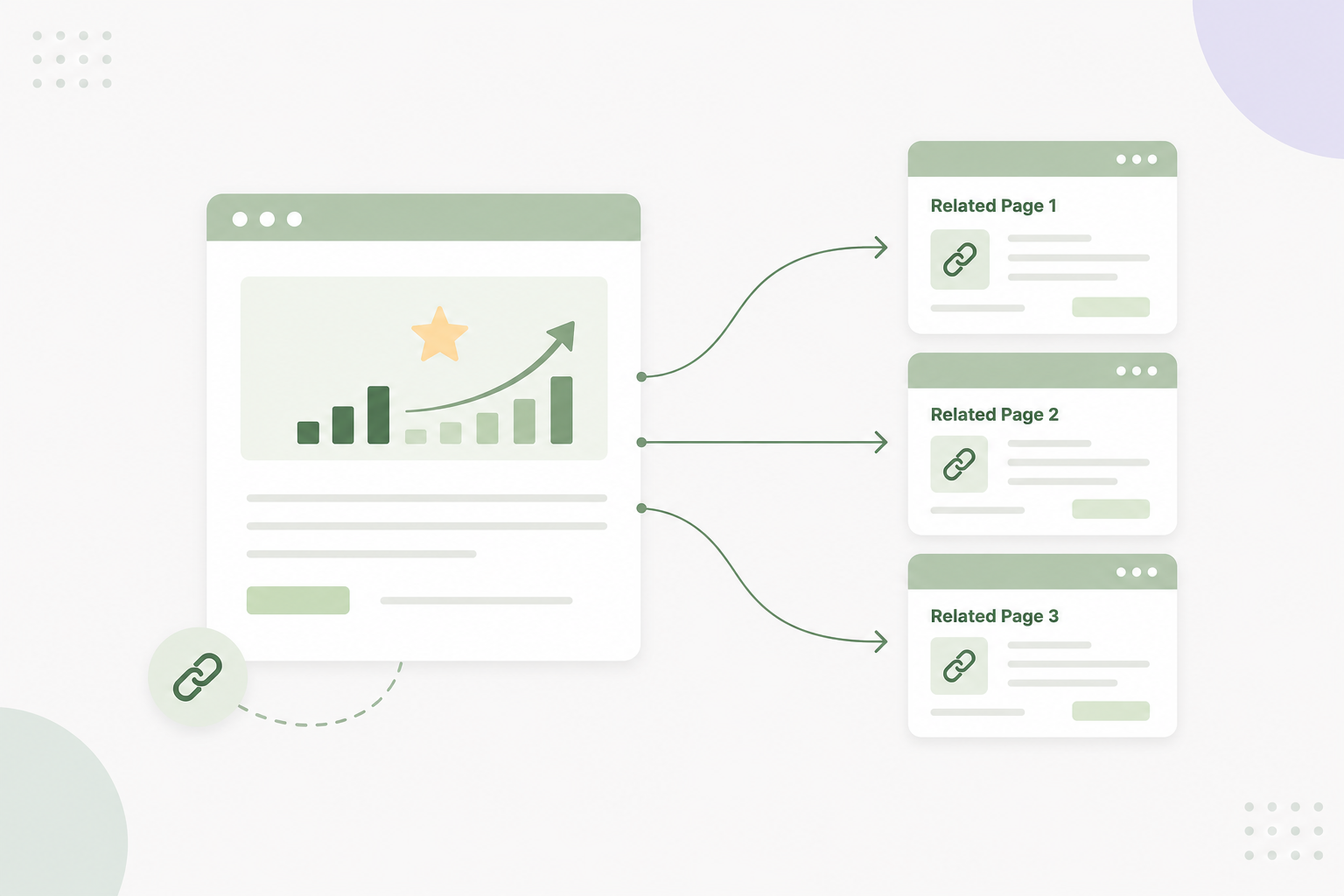
Internal linking is one of the most powerful yet underrated SEO strategies for improving rankings. By strategically connecting your pages, you can guide both users and search engines to your most important content while distributing link juice across your site more effectively.
Search engines like Google rely on internal links to crawl, index, and understand your website structure. When done correctly, internal linking boosts page authority, improves user experience, increases time on site, and helps key pages rank higher in search results.
💡Is link equity leaking from your best pages? Dofollo finds it free — no credit card, no setup time.
Start Free AuditWhat Is Link Juice and Why Does It Matter for SEO?
Link juice is an SEO term used to describe the value or authority that flows from one webpage to another through hyperlinks. When a page links to another page, it passes a portion of its authority, helping the linked page improve its chances of ranking higher in search engine results.
Search engines like Google use this flow of authority to understand the importance and relevance of pages within a website. Pages with more high-quality links pointing to them tend to gain higher visibility, better indexing, and improved ranking positions.
Understanding how link juice works is essential because it lets you distribute authority strategically across your website, boosting the performance of important pages such as service pages, blog posts, and landing pages.
How Search Engines Transfer Authority Through Links
Search engines crawl websites using bots that follow links from one page to another. When these bots discover a link, they treat it as a signal of trust and relevance.
Each link passes a portion of authority, but not all links are equal. Factors like page authority, topical relevance, and the number of outgoing links affect how much value is transferred.
- A link from a high-authority page passes more value.
- Contextual links inside body content usually carry more weight.
- Fewer outbound links often means more link juice per link.
This is why internal linking plays such a critical role. It gives you direct control over how authority flows through your website.
The Difference Between Internal and External Link Juice
There are two main types of link juice in SEO.
- Internal link juice: This comes from links within your own website. You control these links completely, which makes them one of the most practical SEO tools for guiding authority to important pages.
- External link juice: This comes from backlinks on other websites. These links are important for building domain authority, but they are harder to control because they depend on other site owners.
External links help build credibility. Internal links help you distribute that credibility efficiently across your own site.
Why Ignoring Internal Links Leaves SEO Value on the Table
Many site owners focus only on backlinks and overlook internal linking entirely. That leaves ranking potential unused.
Without a solid internal linking strategy, important pages may not get enough authority, search engines may struggle to discover deeper pages, crawl efficiency drops, and valuable ranking signals get wasted.
A strong internal linking system ensures that every valuable page receives the authority it deserves while helping users navigate related content more easily.
How Internal Linking Distributes Link Equity
Internal linking connects pages within your website so link equity can move where it has the most impact. When one page links to another, it passes a portion of its authority to the target page, helping it gain visibility and ranking potential.
A well-structured internal linking strategy ensures that your most important pages, such as cornerstone content, service pages, or high-converting landing pages, receive more authority instead of leaving that value trapped on a handful of URLs.
Understanding PageRank Flow Through Your Site Structure
PageRank is a foundational Google concept for measuring the importance of pages based on links. While the algorithm has evolved, the underlying idea remains the same: links pass value.
When your website follows a clear structure like homepage to category page to subpage, link equity flows naturally from high-authority pages to deeper pages.
- The homepage usually holds the most authority.
- Category and hub pages distribute link juice to related content.
- Pages with more relevant internal links pointing to them are often treated as more important.
A logical structure helps ensure no important page is left without sufficient authority.
How Crawl Depth Affects Which Pages Get the Most Authority
Crawl depth refers to how many clicks it takes to reach a page from the homepage. Pages that sit closer to the homepage usually receive more link equity and get crawled more often.
If important pages are buried too deep, search engines may crawl them less often, assign them less importance, and rank them lower than they deserve.
As a rule of thumb, try to keep key pages within two to three clicks of the homepage and support them with relevant internal links from other strong pages.
The Role of Anchor Text in Passing Relevant Link Juice
Anchor text is the clickable text inside a hyperlink, and it tells search engines what the linked page is about. Strong anchor text helps pass not only authority but also relevance.
Effective anchor text should be descriptive, naturally keyword-rich, relevant to the target page, and varied enough to avoid over-optimization.
- Use anchors like internal linking strategy for SEO.
- Use anchors like improve rankings with link juice.
- Avoid generic anchors like click here when a descriptive alternative fits naturally.
Types of Internal Links and How They Pass Link Juice
Contextual Links Within Body Content
Contextual links are usually the most powerful internal links because they are embedded naturally within relevant copy. When a link appears inside a paragraph about a closely related topic, it sends a strong relevance signal to search engines.
If you are discussing internal linking strategy, linking to related best practices or to an internal linking workflow makes the relationship clear for both users and crawlers.
Users are also more likely to click these links because they are part of the reading flow, which can improve engagement and time on site.
Navigation and Menu Links
Navigation links help define your site architecture. Because they appear across many pages, they signal which pages matter most. They may pass less value per link than strong contextual links, but they are still essential for site hierarchy and crawl efficiency.
Footer Links and Sidebar Links
Footer and sidebar links are useful for connecting secondary pages, legal content, categories, and related resources. They still contribute to overall link distribution, but overloading these areas with too many links can dilute their value.
Breadcrumb Links and Their SEO Impact
Breadcrumbs help users and search engines understand the relationship between pages. They pass link juice back to parent and category pages, strengthen site architecture, and often improve crawl efficiency. They can also enhance search result presentation when Google surfaces breadcrumb paths.
Best Practices for an Effective Internal Linking Strategy
Identify Your Most Authoritative Pillar Pages
Pillar pages are broad, comprehensive, high-value pages that usually attract the most traffic, backlinks, and authority. These pages should act as hubs that link to related subtopics and supporting articles.
To identify them, look for pages with strong traffic, strong backlinks, or strong rankings for broad keywords. Once you know which pages hold the most authority, use them to support weaker but strategically important pages.
Link From High-Authority Pages to Pages That Need a Boost
One of the smartest internal linking tactics is using strong pages to support weaker pages.
- Link from high-traffic blog posts to newly published content.
- Link from top-ranking pages to conversion-focused landing pages.
- Use proven pages to support underperforming content that is close to ranking.
This can improve rankings, speed up indexing, and balance authority more effectively across your website.
Use Keyword-Rich Anchor Text Without Over-Optimizing
Anchor text helps search engines understand the target page, but overusing the same keyword repeatedly can create spam signals. Use natural, readable phrases and mix branded, partial-match, and descriptive anchors instead of forcing exact-match keywords every time.
How Many Internal Links Per Page Is Ideal?
There is no perfect number of internal links per page. The right amount depends on the page length, topic breadth, and the value each link adds to the user. For most blog posts, three to ten strong internal links is a reasonable starting point.
The key is quality over quantity. Every additional link divides attention and authority, so link only where the connection is useful.
Fix Orphan Pages That Receive Zero Internal Links
Orphan pages are pages with no internal links pointing to them. These pages are hard for search engines to discover and almost never receive enough link juice to rank well.
You can fix orphan pages by linking to them from relevant blog posts, category pages, hub pages, or primary navigation where appropriate. This is one of the fastest ways to recover lost SEO value.
Common Internal Linking Mistakes That Waste Link Juice
Using Generic Anchor Text
Anchors like click here or read more provide little context. Descriptive anchors help users and search engines understand the topic of the linked page far more clearly.
Linking to Noindexed or Redirected Pages
Linking internally to pages that are noindexed or redirected can waste link equity. If a target page is not meant to rank, or if the link sends crawlers through unnecessary redirect hops, you are losing some of the value you could be passing elsewhere.
Over-Linking and Diluting Link Equity
If a page contains too many internal links, the value passed through each one is reduced. Keep links relevant and focused rather than trying to link every mention of a topic.
Creating Internal Link Loops That Confuse Crawlers
When pages link in circles without a clear hierarchy, search engines can struggle to identify which page matters most. Use a cleaner structure where pillar pages link to supporting pages, and supporting pages link back where it adds useful context.
How to Audit Internal Links and Find Quick Wins
Use Tools to Map Your Internal Link Structure
Tools like Screaming Frog, Ahrefs, Google Search Console, and authority mapping workflows help you understand how pages are connected and where link equity is flowing.
Spot Pages With Low Internal Link Coverage
Look for pages that receive very few internal links, especially pages that sit deeper in your site structure. These are often easy wins because a handful of relevant links from stronger pages can make a noticeable difference.
Prioritize Pages That Can Benefit the Most
During an internal link audit, focus first on pages ranking on page two or three of Google, important commercial pages, and newly published content that lacks authority. These are often the fastest opportunities to create measurable ranking gains.
Advanced Internal Linking Techniques for Competitive Niches
Topic Clusters and Hub-and-Spoke Linking
Organize content around a central pillar page and multiple supporting subtopics. This helps search engines understand topical depth while letting authority circulate across a tightly related content cluster.
Use Silo Structures to Concentrate Link Juice
Grouping content into topical silos keeps authority focused inside the subjects you want to rank. When pages inside the same topic area link to one another strategically, you strengthen both relevance and rankings for that theme.
Boost Pages Stuck on Page Two of Google
Pages ranking in positions eleven through twenty often need only a small lift. Adding a few strong contextual links from authoritative pages can be enough to move them onto page one.
How Dofollo.ai Helps You Build a Smarter Internal Linking Strategy
Automate Internal Link Suggestions with AI
As websites grow, manual internal linking becomes harder to manage consistently. Dofollo.ai helps by suggesting relevant internal links based on page context, content relationships, and SEO priorities.
Track Link Juice Flow Across Your Content
With a clearer view of which pages are receiving the most internal authority and which pages are being overlooked, you can rebalance your structure and push more value to important pages.
Identify Missed Linking Opportunities at Scale
At scale, it becomes difficult to find every relevant internal linking opportunity manually. Dofollo.ai helps uncover orphan pages, underlinked content, and strong donor pages so you can improve crawlability and authority flow without relying on guesswork.
Final Thoughts
Internal linking is one of the few SEO levers you control completely. When you use it strategically, you make it easier for search engines to discover your content, understand its hierarchy, and pass authority toward the pages that matter most.
If you want stronger rankings without relying only on new backlinks, start by improving your site structure, fixing orphan pages, strengthening anchor text, and linking from your best pages to the URLs that need a boost. A smart internal linking strategy turns existing authority into measurable SEO growth.
About The Author